Logo SAT'2026

School of Thermal Analysis

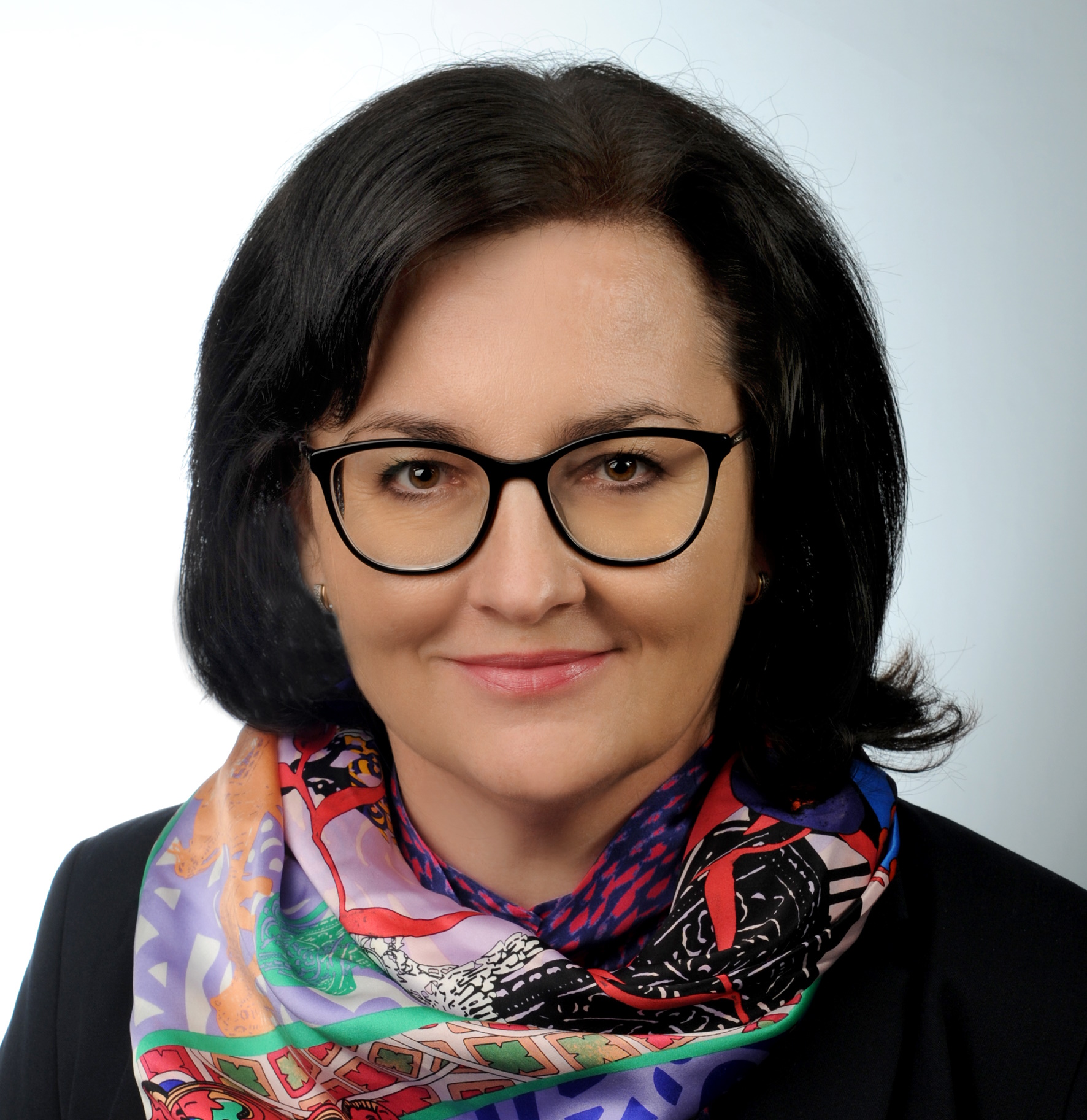
Dr Agnieszka Łącz is a researcher specialising in solid-state chemistry, with a strong focus on studying chemical reaction mechanisms. She has extensive expertise in TG/DTA/DSC techniques, as demonstrated by peer-reviewed publications and her long-standing teaching roles at Thermal Analysis Schools and Seminars (SAT and SeAT series). Furthermore, she actively engages with the thermal analysis community as a member of organising committees for major conferences, including the Conference on Calorimetry and Thermal Analysis (a series of events held in Zakopane), ESTAC 2006, and ICTAC 2021. Her experience is also enriched by research involving mass spectrometry, TPR/TPOx, and electrochemical methods.


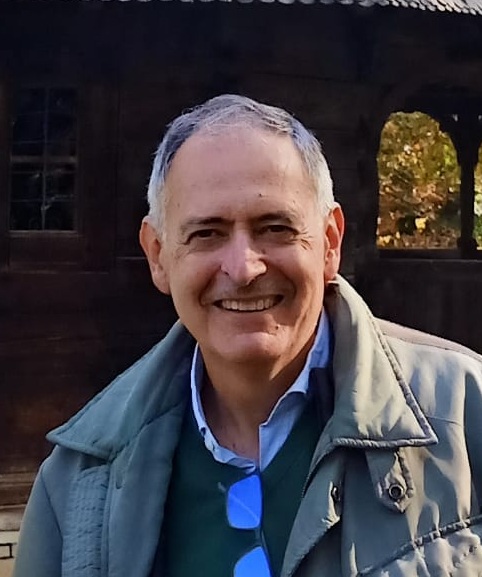
Luis Pérez-Maqueda has a PhD from University of Seville. After graduation, he moved to Clarkson University (USA), where he remained for two years before joining the Materials Science Institute of Sevilla. There, he held different positions, since 2020 he is CSIC full professor. He has been invited professor in a number of foreign institutions in Czech Rep., UK, USA and Germany. More than 30% of his publications correspond to international collaborations. Dr. Perez Maqueda has published 262 indexed journals papers that have received 18000 citations (Scopus). In the last years, he has supervised 7 PhD thesis. He has participated in numerous international congresses as plenary speaker. Since 2012 is member of the editorial board of Journal of Thermal Analysis and Calorimetry and has been invited editor for Ceramics International. Since 2024, he is president of the international confederation for thermal analysis and calorimetry (ICTAC). Dr. Pérez Maqueda has participated as PI in 24 research projects funded by European or Spanish funding agencies.

Kinga Pielichowska obtained her Ph.D. in polymer technology from the Cracow University of Technology in 2004 and is currently a full professor at the AGH University of Krakow, Faculty of Materials Science and Ceramics. She has co-authored more than 110 scientific papers in international journals, contributed chapters to monographs, and co-edited the monograph Multifunctional Phase Change Materials (Eds. K. Pielichowska, K. Pielichowski, Woodhead Publishing–Elsevier, 2023) and ‘Handbook on Thermal Analysis of Polymeric Materials: Methods and Developments’ (Eds. K. Pielichowski, K. Pielichowska, Wiley, 2022). She serves as Vice-Chairperson of the Scientific Commission of the International Confederation for Thermal Analysis and Calorimetry (ICTAC), and is an Editor for Advances in Polymer Technology (Wiley) and Thermal Advances (Elsevier) journals. Her academic research focuses on thermal analysis, polymer chemistry and technology, phase transitions, thermal degradation, and phase change materials (PCMs) for thermal energy storage. She leads a research team at AGH and is currently heading research projects funded by the Polish National Science Centre, dedicated to hybrid systems for the photothermal conversion of solar radiation and the storage of thermal energy using phase change materials.


Krzysztof Pielichowski earned his Ph.D. in thermochemistry in 1995 at the AGH University of Science and Technology, Kraków, Poland. He is currently full professor and head of Department of Chemistry and Technology of Polymers, Cracow University of Technology, director of the Interdisciplinary Center for Circular Economy, and chairman of the Polish Society of Calorimetry and Thermal Analysis. His research focuses on thermal analysis and flame retardancy of polymer bio- and nano-composites, as well as on thermo-oxidative decomposition and pyrolysis of advanced polymeric materials.  He is co-author (or editor) of 11 books and over 180 papers with impact factor, including K. Pielichowska, K. Pielichowski  (Eds.), Multifunctional Phase Change Materials. Fundamentals, Properties and Applications; Elsevier, Amsterdam 2023. He has been recipient of a number of international and national awards, such as Kosciuszko Foundation Fellowship in 2000, Fulbright Fellowship Award in 2003 and the Rector of CUT Awards. He has also been a consultant or cooperating with a number of companies, such as ABB and Grupa Azoty SA. He is a member of the Committee of Chemistry and Committee of Chemical and Process Engineering of the Polish Academy of Sciences and Commission of Technical Sciences of the Polish Academy of Arts and Sciences. He was supervisor of 17 Ph.D. thesis (completed).

Andrei Rotaru is Professor at the Babeş–Bolyai University and Senior Researcher II at the Institute of the Physical Chemistry–Ilie Murgulescu of the Romanian Academy, Romania. He received a BSc in Chemistry & Physics (2006) from the University of Bucharest (Romania) and subsequently obtained the Doctorate of Engineering in Mechanical Engineering (2011) from the Politehnica University of Bucharest (Romania), the PhD in Chemistry (2013) from University of St Andrews (United Kingdom) and the Doctorate of Science in Physics (2016) from the University of Craiova (Romania). Since 2021 he holds the Habilitation in Chemistry from the University of Craiova, Romania. Between April 2014 and October 2015 he was a PostDoctoral Researcher at University of Craiova with a fellowship of Visiting Researcher at the University of Cambridge (United Kingdom). In 2006 he joined INFLPR–The National Institute for Laser, Plasma and Radiation Physics (Romania) as an Assistant Researcher and was promoted up to Senior Researcher II in 2014. Further, in 2017 he became Associate Professor of Chemistry at the University of Craiova, since 2019 he is Senior Researcher II at the Institute of the Physical Chemistry–Ilie Murgulescu of the Romanian Academy, while since 2023 he is Professor at the Babeş–Bolyai University. Currently he is the President of CEEC-TAC (Central and Eastern European Committee for Thermal Analysis and Calorimetry) and Chairman of the Scientific Commission of ICTAC (International Confederation of Thermal Analysis and Calorimetry); also, he was the President of ESTAC (European Society for Thermal Analysis and Calorimetry) between 2018-2022. He is the Editor in Chief of Thermal Advances and the Co-Editor in Chief of Hybrid Advances; he was the Coordinating Editor (2019-2020) and then the Editor in Chief (2021-2023) of Applied Surface Science Advances, serving also as Member of the Editorial Boards of other journals: Journal of Thermal Analysis and Calorimetry, Surfaces and Interfaces, Molecules, Journal of Mining and Metallurgy, Section B: Metallurgy. His research interests include: solid state chemistry, condensed matter physics, thermophysical properties of materials, thermal analysis and calorimetry, dynamics of nonlinear systems, kinetics of heterogeneous processes, surface science, processing thin films of soft materials by laser-assisted techniques.


 

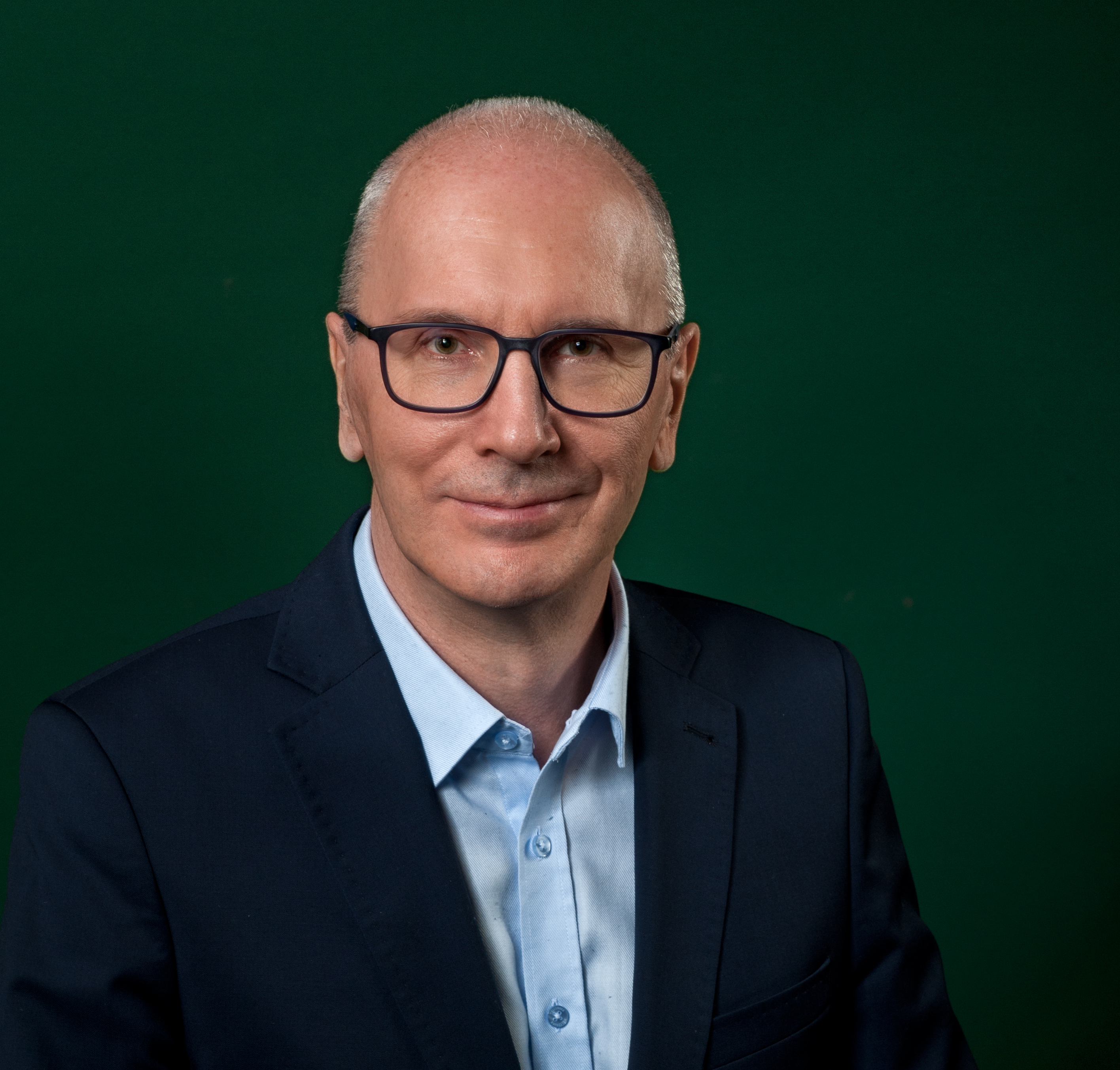
Dr. hab. Eng. Marcin Środa, Professor at AGH University of Krakow, is a graduate of the Faculty of Materials Science and Ceramics at AGH University of Krakow. He has been a long-term member of the Department of Glass Technology and Amorphous Coatings, which he has headed since 2024. His research focuses on glass technology, with particular emphasis on special glasses with mixed network structures and their thermal stability. He has supervised five doctoral dissertations and ninety master’s and engineering theses. For 25 years, he has been responsible for the Thermal and X-ray Research Laboratories, conducting studies on glass and glass-ceramic materials. He is the author of five patents and 186 publications in the field of glass technology.

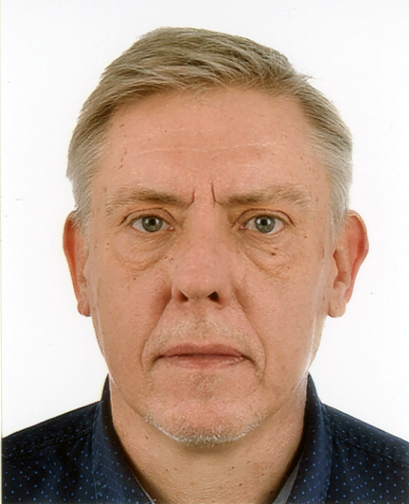
Prof. Alfréd Kállay-Menyhárd

11th School of Thermal Analysis (SAT'2026)

14-17th April 2026 in Zakopane